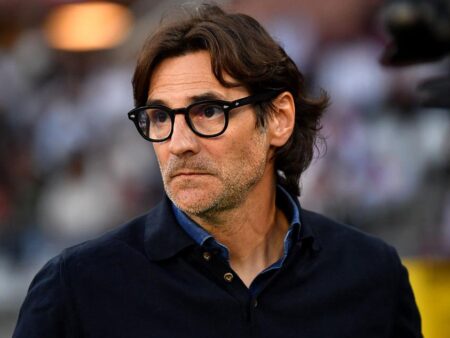

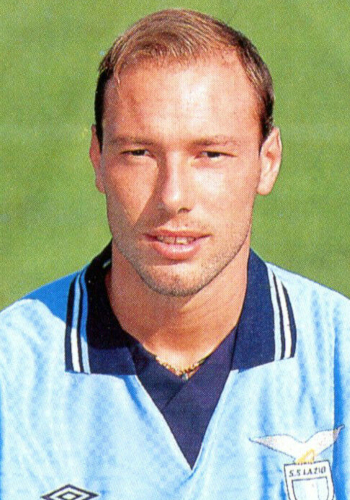
Former Lazio midfielder Dario Marcolin reveals: “As a child, I didn`t dream of football, but of repairing watches. In Rome, I found love with a Bagaglino dancer, and we managed to stay out of the gossip columns.”
Dario Marcolin has been commentating on Serie A matches for Dazn for seven years, balancing his time between the pitch and the studio. He vividly remembers his very first broadcast for the platform: “It was August 3rd, a French Supercup match between PSG and Montpellier, aired from our German studios.” At fifty-three years old, Marcolin has lived many lives, not just in football. He hasn`t coached for nine years, but doesn`t rule out a return to the dugout in the future. He has discovered a new calling in television commentary, which he describes as “a fantastic dimension.” He explains, “When I stopped playing, eighteen years ago, all former footballers wanted to become coaches. Today, however, most aspire to work in television.”
Why this change? Perhaps a lack of desire to study for a coaching license?
“It`s a stable and lucrative alternative,” Marcolin responds. “Before, to remain in this world, the only path was to become a coach.”
When did you realize you preferred asking questions rather than answering them?
“Be careful, I like asking questions, but only technical ones. And coaches appreciate that. Nothing uncomfortable from me; that`s the job of journalists.”
Would you have liked to be a journalist?
“Absolutely not. As a child, my dream was to be a watchmaker. I loved dismantling and reassembling them. This passion for mechanics and electronics has always fascinated me.”
When did you realize that football could truly become your profession?
“At eighteen, with Cremonese. When I made the jump from the youth team to the first team, I understood I was getting my big chance.”
Speaking of Cremonese… Today, you would be playing there with Jamie Vardy.
“But I had Gustavo Abel Dezotti, who was our Vardy back then. A strong character.”
You also met great personalities at Lazio.
“Favalli, Bonomi, and I arrived there. There were already champions like Signori, Winter, Fuser, Cravero. The following year, Marchegiani and Casiraghi joined, and in my first year, Gascoigne was also there. For me, it was `the world of the greats,` and that`s where the significant responsibilities began.”
How did you live life off the pitch?
“Rome was a world of temptations: an enormous, beautiful city, with a thousand opportunities to go out every evening. The biggest challenge was knowing how to say no and focus solely on football. You become a machine. You know you can go out until Thursday, then Saturday is dedicated to family and preparing for the match. The higher the level you reach, the more you have to adopt this mentality.”
That`s an excellent guide on how to avoid gossip.
“I married a Bagaglino dancer. In Rome, at that time, sports and entertainment went hand in hand, and many stories were written in the newspapers. But I was fortunate enough to build a normal family, away from the spotlight of gossip.”
Did you enjoy the role of a locker-room leader?
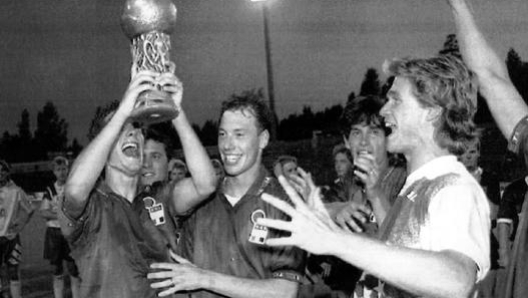
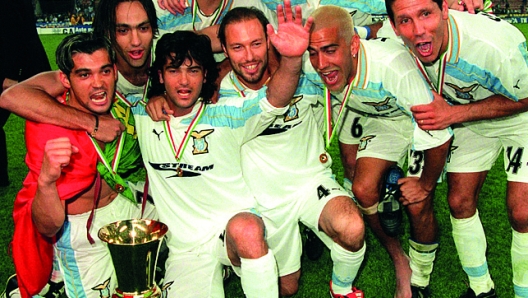
“Yes, temperamentally I was suited for it. I was captain of the U21 National Team that won the European Championship. I also organized Lazio`s Scudetto celebration. My teammates and coaches liked me. At Lazio, I had the honor of being coached by Zoff, Zeman, and Eriksson.”
What are your memories of Sven-Göran Eriksson?
“The tennis matches with him! Sometimes I won, sometimes I lost. He was the classic `ball-hitter,` a rally could last fifteen or twenty shots. He was a decent person, always found a solution for everything and everyone, and no one in the locker room ever had a problem with him, not even those who played less. He had thirty players in the squad? He built thirty important relationships. A true gentleman. The greatness of that Lazio was thanks to him and his calm. On the field, he relied heavily on his players: he was number one in managing the locker room.”
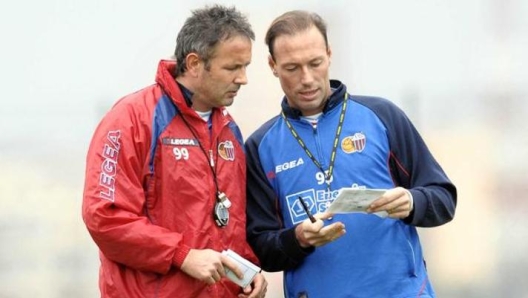
Can you tell us about Sinisa Mihajlovic? He was first your teammate, then you worked together on the coaching staff.
“Yes, we were teammates at Inter, and then I was his assistant at Catania and Florence. Our families are very close. I lived with Sinisa through every phase of his life. He was an extraordinary father, strict but who softened immediately when his children gave him puppy-dog eyes; as a coach, he was direct. He always demanded something new; he constantly pushed me on that.”
Were you close to him during his illness?
“When he was first hospitalized, I was there in Bologna. As soon as we were allowed to see him, with his wife, he told us he was taking twenty-one pills a day, but he always reacted. He had a bone marrow transplant, was discharged, and resumed everything. He even returned to playing padel with me. He always demanded so much from himself. Eight days before he died, he went for a run with his son, and it was his son who told him `Dad, that`s enough.` He didn`t want to give up. The last time he entered the hospital was a Saturday; the following Tuesday, doctors said he was close to death. He passed away on Friday. He managed to give us a few more days.”
In 2020, you lost your father in a heartbreaking way.
“Do you remember the military trucks carrying coffins around Bergamo? That was during the COVID period. He was hospitalized, and we heard nothing more. Eventually, a doctor from Brescia whom I knew, who worked on ambulances there, told me there was nothing more to be done. It was a bolt from the blue.”
Among your many lives, there`s also one deeply connected to padel.
“In padel, I found a circuit that brought together many former footballers and has become a real business. Economically, it`s giving many a second life, with a great return. I started in 2015 and never would have imagined such an expansion. For me, it`s a lot about strategy, a lot about mental focus, so it can`t just appeal to athletes. It`s a crazy sport, that`s for sure, because everyone tells you they`re strong. But, I admit, the `little aches` do arrive. And also, it doesn`t make you lose weight!”
© REPRODUCTION RESERVED