
Italian football is undergoing a significant transition, marked by a dearth of a permanent coach and a World Cup qualification failure. The question of the next generation’s emergence has long troubled the national team.
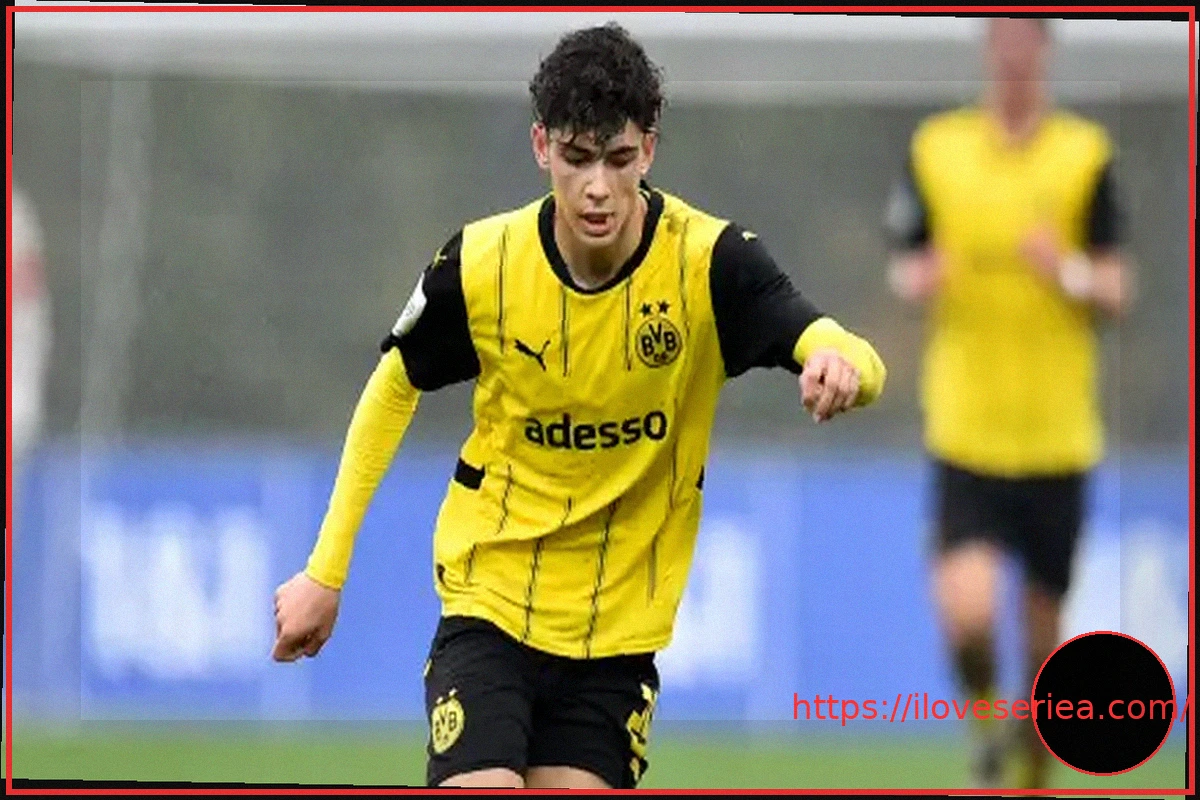
The answer to this pressing question may lie with players currently donning the black and yellow of Borussia Dortmund.
Baldini’s Strategic Youth Focus
Interim coach Silvio Baldini, promoted from the Under-21 setup after Gennaro Gattuso’s resignation, has selected a squad for upcoming friendlies against Luxembourg and Greece that prioritizes youth and future potential. With an average age of 20 years and six months, Baldini has made it clear that this period is dedicated to nurturing the next cycle of players, eschewing established senior figures.
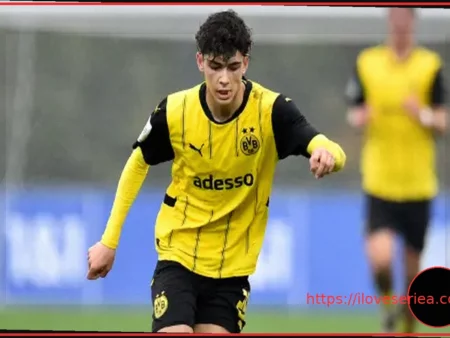
A notable aspect of this squad is the inclusion of three promising talents from Borussia Dortmund. Samuele Inacio, an 18-year-old forward, recently made his Bundesliga debut for Dortmund, scoring on his first start. His extended contract until 2029 underscores his high valuation by the German club. Inacio, son of former Serie A striker Inacio Pià, has represented Italy at various youth levels.
Baldini has opted to fast-track Inacio directly to the senior squad, bypassing the Under-21s. Alongside him, centre-back Filippo Mane, despite an injury-plagued season, and midfielder Luca Reggiani, a product of Dortmund’s extensive youth system, have also earned call-ups to the Italian national team.
The Italian FA’s Youth Development Strategy
Baldini’s mandate for the June fixtures against Luxembourg and Greece is clear: these matches are not about immediate results but about identifying and integrating young talent at the senior level before a permanent coach takes over. This proactive approach to promoting young players to the senior squad is a deliberate strategy to foster their development.
While Gianluigi Donnarumma, the Manchester City goalkeeper and Italy’s captain, is the sole experienced player included, his role is primarily that of a mentor. The squad is otherwise populated by emerging players like Pietro Comuzzo, Niccolò Pisilli, Marco Palestra, and Francesco Pio Esposito, who have limited prior senior international experience, alongside debutants such as Davide Bartesaghi (Milan), Honest Ahanor (Atalanta), and Francesco Camarda (on loan at Lecce).
The selection highlights a remarkable breadth of young talent, including players based abroad. Beyond the Dortmund contingent, Fabio Chiarodia plays for Borussia Mönchengladbach, and Luca Koleosho represents Paris FC. This distribution is seen as an indirect acknowledgment that Serie A clubs have been slower to offer first-team opportunities to teenagers, with German and French academies currently playing a significant role in Italian player development.
Dortmund’s Influence and Italy’s Risks
The call-up of Inacio is particularly significant. European football circles view this not just as a promotion but as a proactive move by Italy to secure the allegiance of a player whose entire footballing education has taken place in Germany. Dortmund’s decision to extend his contract and grant him a Bundesliga debut concurrently with his senior international call-up suggests a strategic intertwining of club and national team interests.
With the head coach position still vacant, the question of who will ultimately shape the identity of this emerging generation – the Italian Football Federation or the German club’s infrastructure – remains open. The call-ups of Mane and Reggiani represent a more forward-looking selection, based on their potential and impressive performances in youth football, rather than their current senior team experience.
This squad is essentially an investment in the future, rather than a reflection of current strength. The success of Italy’s approach to retaining these dual-eligible talents will hinge on future decisions. A permanent coach who reverts to traditional senior players risks losing the opportunity to integrate this new wave of talent.
Inacio, fully immersed in Dortmund’s environment and experiencing success, already possesses strong belief in himself. The challenge for Italy is to cultivate his belief in the national team. This highlights the core tension of Baldini’s squad selection: the philosophy is sound, and the urgency is justified.
Having missed the last two World Cups, the Italian national team can no longer afford to wait for talent to emerge. They must actively seek it out, and the Dortmund connection indicates a clear direction for this pursuit. The greater challenge lies in retaining these promising young players.